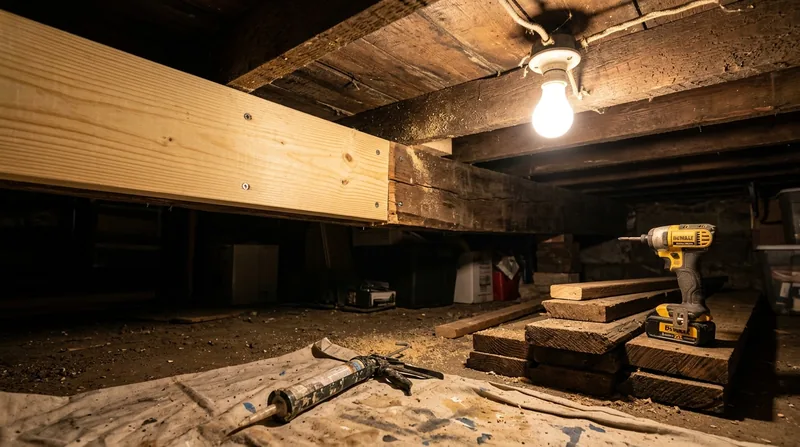




Sagging, bouncy, or soft floors are a hallmark of older Des Moines homes, from the Victorian mansions of Sherman Hill to the brick foursquares of Beaverdale and the 1950s ranches of Merle Hay. The cause is rarely a single problem. Century-old joists were sized for lighter loads; ice dams and roof leaks have rotted sill plates and rim joists; eastern subterranean termites work up from the soil; and summer humidity feeds moisture into crawlspaces and basements. Floor joist and subfloor repair in Des Moines is not always about ripping everything out. We assess the wood, sister undersized joists where the structure justifies repair, replace rotted sections, and rebuild the subfloor so your kitchen cabinets and bathroom fixtures sit on solid framing. The result is a level floor, restored load capacity, and a home that feels solid underfoot again.
Why Floor Joist and Subfloor Problems Matter in Des Moines
Des Moines sits on rolling prairie with the Des Moines and Raccoon rivers cutting through the metro. That geography brings cold snowy winters with ice dams, hard freeze-thaw cycles, summer humidity, and the occasional flood in low-lying neighborhoods. The real wood-damage drivers are ice dams rotting roof edges and soffits, which then weep into the rim joist and subfloor; leaks from old plumbing and bathrooms feeding rot into sills and joists; and eastern subterranean termites working up from the soil, especially in older homes with crawlspaces close to grade. A soft floor is not an inconvenience. It signals that load-bearing framing is compromised, deflecting under the weight of kitchen appliances, bathtubs filled with water, or the simple daily traffic of a household. Left unaddressed, the deflection accelerates, the rot spreads, and the cost of repair climbs.
- Check crawlspace or basement framing for dark staining, soft wood, or visible termite mud tubes on sill plates and joists.
- Walk the floor with your eyes closed and feel where it sags or bounces under your weight in kitchens, bathrooms, and load-bearing walls above.
- Look for water stains or efflorescence (white mineral deposits) on rim joists, indicating past or ongoing moisture intrusion.
- Listen for hollow spots when you tap the subfloor with a hammer, a sign of decay or insect damage beneath the surface.
- Note the age and style of your home, because Victorian and foursquare homes often have original sill plates and joists that are undersized for modern use.
Early detection keeps your repair costs down and prevents structural problems that affect resale value and safety.
Key info: A 1920s brick foursquare in Beaverdale with a soft bathroom floor often has a rotted rim joist where the roof leaked into the wall cavity for years. A 1950s ranch in Merle Hay with a bouncy kitchen typically has undersized joists (2x8 or 2x10) that deflect under the weight of a modern refrigerator and dishwasher. Both are repairable without full replacement.
The Des Moines building department and the City of Des Moines website offer guidance on when structural repairs require a permit. Structural work such as replacing joists or altering load-bearing walls commonly does, and requirements vary by scope and location. Consult your local building department to confirm before work begins.
How We Repair and Reinforce Floor Joists and Subfloor in Des Moines Homes
Our process starts with a visual inspection of the framing from the crawlspace or basement, followed by probe testing to measure wood density and identify rot or insect damage. We document the damage, explain what we find, and present repair options. If the joist is partially rotted but structurally sound, we sister a new joist alongside it, fastening with bolts and nails to create a composite beam that carries load. If the wood is too far gone, we remove the damaged section and replace it with pressure-treated lumber sistered to the bearing points. Subfloor is rebuilt in sections using CDX plywood or solid wood, depending on the original construction and your aesthetic preference. We level the new framing before the subfloor goes down, so your finished floor sits flat. The work often happens in phases to avoid disrupting your home, and we coordinate with any wood rot or dry rot repair that may be needed in adjacent framing.
- We probe the entire joist bay to identify the full extent of decay before we plan the repair scope.
- We remove any insulation and debris to expose the framing and verify bearing points and existing fasteners.
- We sister new joists with bolts at 16 inches on center, creating a reinforced beam that distributes load evenly.
- We replace rotted rim joists and sill plates with pressure-treated lumber, bolted to the foundation or band board.
- We rebuild subfloor sections with new CDX plywood, screwed and glued to the joists for a solid, squeak-free surface.
- We level the subfloor using shims and joist hangers where needed, so your new finish floor is flat and true.
The result is a floor that feels solid, carries load without deflection, and is ready for new flooring, tile, or carpet.
Example: A 1910s Tudor in Owl's Head with a soft master bedroom floor had a rotted rim joist along the east wall where an old roof leak had wept into the rim. We sistered the rim joist, reinforced two undersized joists beneath the bedroom, rebuilt the subfloor, and leveled the floor so the new hardwood flooring would lay flat. The homeowner reported that the floor felt "like new" within weeks of completion.
Repair vs. Replace: Methods We Use for Floor Joists and Subfloor
| Approach | Description | Best for |
|---|---|---|
| Sistering | A new joist is fastened alongside the existing joist with bolts and nails, creating a composite beam that shares the load. | Undersized or partially rotted joists where the wood is structurally sound enough to bear half the load during repair. |
| Partial Replacement | The rotted section of joist (typically 3 to 6 feet) is cut out and replaced with pressure-treated lumber, bolted to the bearing points on both ends. | Joists with localized rot at a mid-span or bearing point, where the rest of the joist is sound and can carry load during work. |
| Full Joist Replacement | The entire joist is removed and replaced with new pressure-treated lumber of the same dimension or larger, bearing on the rim joist and band board. | Joists that are severely rotted, insect-damaged, or undersized for the load they carry, especially in kitchens and bathrooms. |
| Subfloor Replacement | Rotted or water-damaged subfloor is removed and replaced with new CDX plywood or solid wood, fastened to the joists with screws and construction adhesive. | Water damage from plumbing leaks, ice dams, or termite damage that affects the subfloor but leaves joists intact. |
| Rim Joist and Sill Plate Repair | Rotted rim joists and sill plates are cut out and replaced with pressure-treated lumber, bolted to the foundation or band board. | Ice dam leaks, roof leaks, or termite damage along the perimeter of the house where the framing meets the foundation. |
Each method is chosen based on the extent of damage, the structural role of the member, and the cost-benefit of repair versus replacement. We always prefer repair when the wood justifies it.
Floor Joist and Subfloor Repair Cost in Des Moines: What to Expect
The cost of floor joist and subfloor repair in Des Moines ranges from $1,800 for a simple sistering job on one or two undersized joists to $8,000 or more for extensive rot involving multiple joists, rim joists, and subfloor replacement. Several factors affect the final price. The extent of damage is primary: a localized rotted section costs less than full joist replacement across multiple bays. Access matters, because crawlspaces in older homes are often tight, cramped, and full of debris, which slows work. The size and species of the framing affects labor and material: replacing a 2x12 joist costs more than a 2x8, and pressure-treated lumber is pricier than dimensional lumber. Proximity to plumbing, electrical, or HVAC systems adds complexity. Whether the subfloor needs replacement or just leveling also moves the estimate. The best way to understand your cost is to get two or three estimates from local carpenters who will inspect your crawlspace or basement in person. Visit our pricing page for more detail on typical costs by repair type.
We offer a free estimate with no obligation. Call us at (515) 762-6553 and we will schedule an inspection within 24 hours. We bring a moisture meter and probe tools, spend 30 to 45 minutes under your home, and give you a written estimate with photos before any work begins.
Floor Joist and Subfloor Repair Near Me: What Des Moines Homeowners Should Know When Hiring a Carpenter
Choosing a carpenter for structural work like joist and subfloor repair is not the same as hiring someone to paint trim. You need a contractor who understands load paths, bearing points, and the building code, and who will explain what they find and why they recommend a specific repair. Look for a carpenter who is fully insured and can provide proof of coverage. Ask for references from recent joist or subfloor jobs and call them. Do not be shy about asking whether the floor feels solid, whether the work was completed on time, and whether the carpenter explained the scope clearly before starting. Get at least two estimates so you can compare scope, materials, and price. Ask each contractor whether a permit is required for your repair, and if so, whether they will pull it or whether you will handle it through your local building department. If your home is in a historic district or subject to HOA rules, verify that your repair plan complies with those restrictions before you book. Des Moines homeowners in neighborhoods like Sherman Hill, Beaverdale, and Waterbury should check with their neighborhood association or the Des Moines Historic Preservation Commission before beginning work. Contact us at our contact page to schedule your free estimate and ask any questions about your specific situation.
Floor Joist & Subfloor Repair in Des Moines: Pricing Guide
| Service | Price | Details |
|---|---|---|
| Sistering one or two joists | Starting at $1,800 | Includes probe testing, bolting new joists alongside existing framing, and leveling. Labor and material for undersized joists in kitchens or bathrooms. |
| Partial joist replacement (single bay) | Starting at $2,400 | Removal and replacement of rotted joist section up to 6 feet, bolted to bearing points, includes subfloor leveling and fastening. |
| Full joist replacement or rim joist repair | Starting at $3,200 | Complete joist removal and replacement with pressure-treated lumber, or rotted rim joist and sill plate replacement with bolting and bearing verification. |
| Subfloor replacement (100 to 200 sq ft) | Starting at $2,800 | Removal of water-damaged or rotted subfloor, replacement with CDX plywood or solid wood, screwed and glued to joists for a solid surface. |
| Multi-joist or extensive repair | On estimate | Jobs involving multiple joists, rim joist, sill plate, and subfloor across large areas require on-site inspection to assess scope and access. |
| Estimate and travel | Free | No charge for free estimate or travel to Des Moines and surrounding areas. Response within 24 hours at (515) 762-6553, no obligation. |
Indicative pricing, the exact cost depends on square footage, finish, and site access. Free personalized estimate within 24h at (515) 762-6553.


