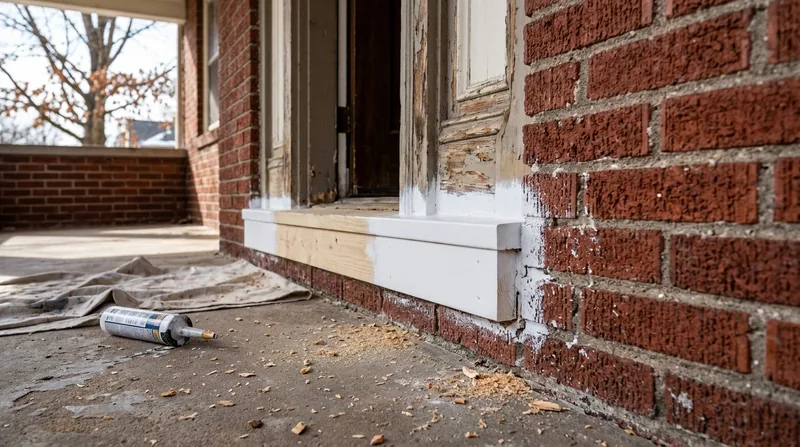




Wood Rot & Dry Rot Repair in Des Moines is a year-round necessity in central Iowa. Our climate cycles between hard freeze-thaw winters that drive ice dams into fascia and soffits, and humid summers that keep moisture trapped in sills, porch decks, and rim joists. Victorian and Tudor homes in Sherman Hill, Beaverdale brick colonials, and 1950s ranch homes all face the same enemy: wood that stays wet long enough to soften. We cut out every compromised section, treat the sound wood around it, and rebuild with rot-resistant lumber that will outlast the original. The goal is always repair over replacement when the structure justifies it, and honest replacement when it does not.
Why Wood Rot and Dry Rot Damage Accelerates in Des Moines Winters and Summers
Des Moines sits on rolling prairie where the Des Moines and Raccoon rivers flood the bottoms, and the freeze-thaw cycle is relentless. Ice dams back up snowmelt under roof edges and into fascia boards. Summer humidity lingers in basements and crawlspaces, feeding rot in floor joists and subfloors. Hail and wind tear siding and porch decking, opening gaps where water pools. Unlike coastal fog climates that dry out, our moisture stays trapped for months, turning wood soft and spongy from the outside in.
- Ice dams in winter soak fascia, soffit, and porch ledgers, creating conditions where rot develops year after year.
- Summer humidity and slow roof or window leaks keep sills and rim joists damp enough for fungal growth to accelerate.
- Hail damage and wind-torn siding create entry points that funnel water directly into framing and sheathing.
- Floor joists and subfloors in older basements absorb groundwater and condensation, especially in homes built before vapor barriers were standard.
- Older red-brick Beaverdale Tudors and Sherman Hill Victorians have wood trim and porch details that sit lower to grade and retain moisture longer than modern construction.
Left unchecked, soft wood becomes a structural liability. We stop that progression by removing the rot and rebuilding sound.
Key info: A fascia board soaked by an ice dam in January can show visible soft spots by April. A porch deck with trapped water underneath can lose 2 to 3 inches of bearing in a single humid summer. Early intervention costs far less than replacing an entire rim joist or subfloor system.
For more on structural damage from moisture, see our guide to Floor Joist & Subfloor Repair in Des Moines.
How We Repair Wood Rot and Dry Rot: A Step-by-Step Process
Our method is straightforward and field-proven. We probe the wood to find the extent of soft material, cut back to sound fiber, treat the exposed wood to prevent future rot, and rebuild the damaged section with pressure-treated lumber or rot-resistant species. We do not cover problems or leave soft spots underneath. Every repair is designed to last 20 years or more in Des Moines weather.
- We inspect and probe the affected area with hand tools to map the exact boundary between soft and sound wood.
- We cut out all compromised material, creating clean lines that we can rebuild and finish to match the existing surface.
- We treat the exposed sound wood with a wood preservative to inhibit future fungal colonization.
- We rebuild the damaged section using pressure-treated lumber, composite materials, or epoxy-based wood fillers, depending on the location and load requirements.
- We finish the repair with stain or paint to match the surrounding wood and protect the new material from moisture.
- We address the source of moisture where possible, such as improving drainage, resealing flashing, or recommending gutter maintenance.
This approach preserves the original structure and keeps costs lower than full replacement.
Example: A homeowner in West Des Moines noticed soft spots in the fascia board under the north eave. We cut out 18 inches of rot, treated the rim joist behind it with preservative, and installed new pressure-treated fascia. Total cost was under $1,200 and the repair will outlast the original installation. Had we waited two more years, the rot would have reached the structural header, requiring a full rafter-end rebuild at 3 to 4 times the cost.
Learn more about our Framing & Structural Carpentry services for larger wood rot repairs that affect load-bearing members.
Wood Rot Repair Methods: Repair vs. Replace
| Approach | Description | Best For |
|---|---|---|
| Localized cutout and rebuild | Remove soft sections, treat sound wood, install new pressure-treated lumber or epoxy filler in place | Fascia, soffit, porch trim, sills where rot is confined to 25 percent or less of the member |
| Sistering and reinforcement | Install a new sound member alongside the compromised one, bolted or screwed to carry load together | Floor joists, rim joists, and beams where the rot affects load capacity but the overall member is still structurally present |
| Full member replacement | Remove the entire rotted board or beam and install new pressure-treated or engineered lumber in its place | Rot that affects more than 50 percent of the member depth or span, or where structural integrity is compromised |
| Epoxy wood stabilization | Inject epoxy resin into soft wood to harden and stabilize it, then seal the surface | Decorative trim, exterior doors, and historic details where appearance matters and the member is not load-bearing |
Every job is different. We assess the wood in person and recommend the most cost-effective solution that will hold up in Des Moines weather.
Wood Rot & Dry Rot Repair Cost in Des Moines: What to Expect
Rot repair pricing depends on the extent of damage, the accessibility of the wood, and the method required. A small fascia repair runs far less than a floor joist replacement because the scope is different. We recommend getting 2 to 3 estimates so you understand what you are paying for and why the costs differ. Many homeowners assume all rot repairs cost the same; they do not.
Factors that move the cost up include the number of members affected, the need for temporary support during work, the distance from the work area to our trucks and equipment, and whether the repair is on a historic property or in a neighborhood with HOA restrictions. A porch deck with rot in multiple joists costs more to repair than a single fascia board. A floor joist under a bedroom costs more to support and repair safely than one in a basement corner.
See our full pricing page for detailed breakdowns by service type. We provide a free estimate with no obligation, and we respond within 24 hours at (515) 762-6553.
What to Look for When Hiring a Wood Rot Repair Carpenter Near Des Moines
Finding a carpenter you can trust matters. Des Moines has many handymen and franchises, but the difference between a shop that sends the same carpenters to every job and one that rotates crews is enormous. You want someone who understands wood pathology, explains what they find, and proposes repair before replacement.
Check that the contractor is fully insured and can show proof of coverage. Ask for references from recent rot repair jobs, not just a list of names. Request a detailed estimate that breaks down labor, materials, and method so you know what you are paying for. If the work is structural, confirm that your local building department requires a permit and that the contractor is familiar with Des Moines and surrounding city permit processes.
Do not assume the lowest estimate is the best. A contractor quoting half the price of two others is likely cutting corners on material, method, or warranty. Ask why their estimate is lower and what they are doing differently.
Contact us for a free estimate and references from homeowners in Des Moines, West Des Moines, Ankeny, and Urbandale. Call (515) 762-6553 or visit our contact page to request an appointment.
Wood Rot & Dry Rot Repair in Des Moines: Pricing Guide
| Service | Price | Details |
|---|---|---|
| Small fascia or soffit repair | Starting at $650 | Cutout and rebuild of rot-damaged fascia, soffit, or trim up to 24 inches in length, including new pressure-treated lumber and finish |
| Porch deck or sill repair | Starting at $1,200 | Localized rot removal and rebuild in porch ledgers, sill plates, or deck framing, with temporary support during work and full finish |
| Floor joist or subfloor repair | Starting at $2,400 | Sistering or partial replacement of rot-damaged floor joists or subfloor in basement or crawlspace, including moisture assessment and treatment |
| Structural beam or rim joist replacement | On estimate | Full or major replacement of load-bearing members requires on-site assessment, possible temporary support, and may require a structural engineer consultation and permit |
| Travel and estimate | Free | No charge for travel within Des Moines and surrounding service areas, free written estimate with 24-hour response time |
Indicative pricing, the exact cost depends on square footage, finish, and site access. Free personalized estimate within 24h at (515) 762-6553.


