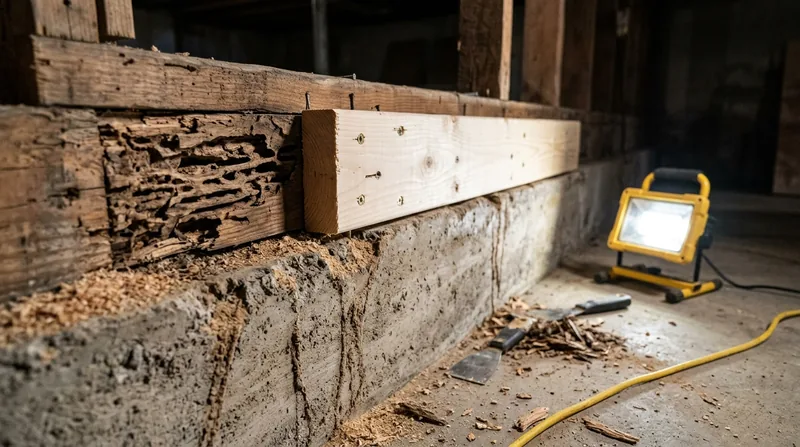




Termite damage repair in Des Moines addresses one of the most persistent wood-destroying threats in central Iowa. Eastern subterranean termites work their way up from the soil into sills, floor joists, porch framing and rim joists, especially in older homes where moisture and soil contact create ideal conditions. Unlike a one-time event like a storm or hail strike, termite activity is gradual and often undetected until structural wood has lost significant strength. We replace damaged studs, sills, subfloor sections and rim joists, then address the moisture and soil contact that allowed the infestation to take hold in the first place. Our work is grounded in the building stock of Des Moines, from the grand Victorian and Tudor homes of Sherman Hill and Beaverdale to the brick foursquares and bungalows of older neighborhoods, all of which sit on the rolling prairie with heavy freeze-thaw cycles, summer humidity and frequent leaks that feed rot and attract termites and carpenter ants.
Why Termite Damage Matters in Des Moines Homes
Central Iowa's climate and soil conditions make eastern subterranean termites a year-round concern. These insects tunnel through wood from the soil line upward, often leaving the surface intact while hollowing out the interior. By the time visible damage appears (soft wood, mud tubes, or sagging floors), significant structural loss has usually occurred. The problem is compounded in Des Moines by the region's older housing stock, many homes built before modern moisture barriers and termite shields were standard. Summer humidity, spring snowmelt, roof leaks and ice dam damage all create the wet conditions that termites and carpenter ants exploit.
- We inspect for soft spots in sills, joists and subfloor using probing and moisture meters to assess the depth of damage.
- We remove compromised wood sections and replace them with pressure-treated or solid lumber, sistering new joists alongside damaged ones when the underlying structure allows repair.
- We close off soil contact by sealing rim joists, sill plates and crawl space openings to prevent future entry.
- We document the damage with photographs and measurements to support your insurance claim if applicable.
Catching termite damage early and addressing it promptly prevents the structural failure that comes from years of unchecked wood loss.
Key info: If you have a pest inspection report showing termite activity, bring it to us. We work from your inspector's findings and replace the wood they've identified as damaged. Termite treatment and extermination are handled by licensed pest control operators, not carpenters. Our job is to restore the structural integrity of your home.
For more information on the full range of wood damage we repair, see our wood rot and dry rot repair service.
How We Repair Termite Damage in Des Moines Homes
Our approach begins with a thorough inspection of the affected areas, using moisture readings and careful probing to understand the full extent of the damage. We work from your pest inspection report and identify which wood can be reinforced through sistering (running a new joist or stud alongside the damaged one) and which sections must be cut out and replaced entirely. We then source appropriate lumber, install blocking and bracing to support the structure during work, and complete the repair with attention to load paths and building codes.
- We assess the damage zone with moisture meters and visual inspection to determine repair versus replacement.
- We install temporary support posts or bracing to carry the load while we work on the affected framing.
- We cut out soft or severely damaged wood and replace it with pressure-treated lumber or solid wood rated for structural use.
- We sister new joists or studs alongside partially damaged members when the wood can still carry load.
- We seal rim joists, sill plates and crawl space openings with foam, caulk or rigid barriers to block soil contact and moisture entry.
- We remove temporary bracing once the new wood is secured and load paths are restored.
The entire process is designed to restore structural function while preventing the moisture and soil conditions that led to the infestation in the first place.
Example: A Beaverdale home with a 1950s brick foundation and no perimeter drain had termites working up the sill plate into the rim joist and first-floor subfloor. We replaced the compromised rim joist section with pressure-treated lumber, installed a rigid foam sill seal, and graded the soil away from the foundation to shed water. The repair took three days and cost $2,800. Preventing future moisture and soil contact was as important as replacing the damaged wood.
For related structural carpentry work, including joist replacement and foundation framing, see our floor joist and subfloor repair service.
Repair Methods and Approaches
| Approach | Description | Best for |
|---|---|---|
| Sistering | Running a new joist or stud alongside a damaged member and bolting or nailing them together to share the load. | Partial damage where the existing wood retains 40-60% of its original strength and can still carry some load during the repair. |
| Selective Replacement | Cutting out the severely damaged section of a joist, sill or stud and splicing in a new piece of pressure-treated or solid lumber using bolted connections. | Damage limited to one section of a member, with sound wood on either side of the cut-out zone. |
| Full Member Replacement | Removing the entire damaged joist, rim joist or sill plate and installing a new one, with temporary bracing to support the load above. | Extensive damage affecting most of the member's length or load-bearing capacity, or where the member is heavily loaded. |
| Moisture and Entry Sealing | Installing sill seals, closing rim joist voids, grading soil away from the foundation and sealing penetrations to block water and soil contact. | All termite repairs, as a preventive measure to stop future infestations from establishing in the same location. |
The method we choose depends on the extent of the damage, the structural role of the member, and the load it carries. We always prioritize repair over replacement when the wood justifies it.
Termite Damage Repair Cost in Des Moines: What to Expect
Termite damage repair costs in Des Moines typically range from $1,200 to $6,500 depending on the scope of damage, the number of members affected and the complexity of access. A small sill plate repair with localized subfloor replacement may run $1,500 to $2,500. Extensive damage involving multiple joists, rim joists and structural bracing can exceed $5,000. The primary cost drivers are the linear feet of damaged wood to replace, whether sistering or full replacement is needed, the difficulty of accessing the damage zone (crawl space versus open basement), and whether temporary bracing is required during the work.
We recommend getting estimates from two or three qualified carpentry contractors to compare scope and pricing. An honest estimate will break down the repair method, the materials used (pressure-treated versus solid lumber), labor hours and any temporary bracing or specialized equipment. Be wary of contractors who propose replacing entire rim joists or subfloor systems when selective repair is possible. Conversely, don't accept a quote that ignores obvious moisture or soil contact issues that will simply allow termites to return.
For a detailed breakdown of pricing across different repair scenarios, visit our pricing page. We offer a free estimate with a 24-hour response time. Call us at (515) 762-6553 to schedule an inspection and get a concrete number for your specific situation.
Termite Damage Repair Near Me: What Des Moines Homeowners Should Know When Hiring
Choosing the right carpenter for termite damage repair requires more than a low quote. Look for a contractor who is fully insured and can provide proof of coverage. Ask for references from recent jobs and follow up with at least two of them. A reputable contractor will explain the damage clearly, walk you through the repair method and explain why they're choosing sistering versus replacement. They should also address moisture and soil contact as part of the repair, not just swap out the damaged wood and move on.
Understand that structural repairs often require permits from the city or county building department in Des Moines. Your contractor should be familiar with local requirements and willing to work with inspectors. Ask whether the job will need a permit before you sign a contract. If your home is in a historic district (like Sherman Hill or Owl's Head), check with the local historic preservation board to see if there are restrictions on materials or methods. Homeowners associations may also have requirements for exterior work. Get these questions answered before the work begins.
Contact us for a free estimate and a clear explanation of your options. We work throughout Des Moines, West Des Moines, Ankeny, Urbandale, Johnston and surrounding areas. Call (515) 762-6553 or visit our contact page to book a consultation with no obligation.
Termite Damage Repair in Des Moines: Pricing Guide
| Service | Price | Details |
|---|---|---|
| Small sill or rim joist repair | Starting at $1,200 | Localized damage up to 8 linear feet, sistering or selective replacement, includes sealing entry points and moisture barriers |
| Moderate damage with multiple members | Starting at $2,800 | Damage across 2-3 joists or studs, full member replacement on one or more, temporary bracing, crawl space or basement access |
| Extensive structural repair | Starting at $5,000 | Multiple members across large area, significant subfloor involvement, complex bracing, difficult access, or load-bearing considerations |
| Travel and site assessment | Included | No mileage fee or call-out charge throughout Des Moines metro and surrounding service areas |
| Free estimate | No cost | 24-hour response, on-site inspection with moisture meter and damage assessment, no obligation to book |
Indicative pricing, the exact cost depends on square footage, finish, and site access. Free personalized estimate within 24h at (515) 762-6553.


