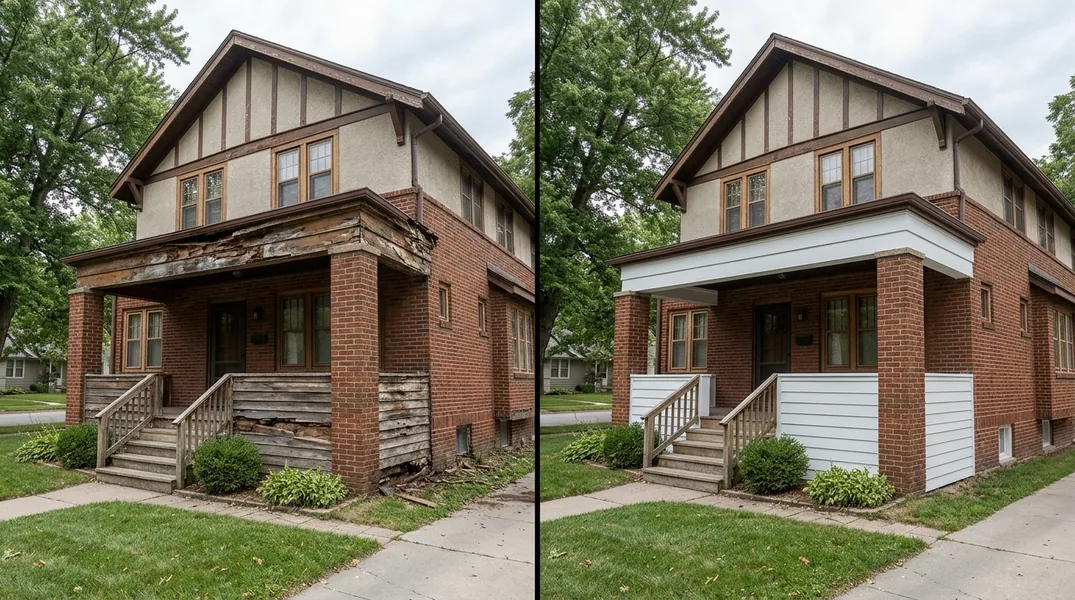
Understanding Hail Damage vs Wood Rot
When you notice damage to your home's wood surfaces, siding, or roof, it's natural to wonder what caused it. In Des Moines, homeowners face two common culprits: hail damage and wood rot. While both can compromise your home's structural integrity and appearance, they require very different repair approaches. Understanding the distinction is the first step toward protecting your investment.
Hail damage occurs suddenly during severe weather events, leaving visible impact marks on exposed surfaces. Wood rot, by contrast, develops slowly over months or years as moisture seeps into wood and fungi begin to break down the material from within. Misidentifying the problem could lead you down the wrong repair path, wasting time and money. That's why it's important to know what each type of damage looks like and how to recognize the telltale signs.
Signs of Hail Damage on Siding and Roofing
Hail damage typically appears as dents, dings, or bruises on the surface of your home's exterior. When large hailstones strike wood siding, asphalt shingles, or metal gutters, they leave behind rounded or irregular indentations. These marks are often clustered in one area, reflecting the path of the hailstorm. The damage is usually immediate and obvious, especially if the hail was particularly large or the storm was severe.
On wood siding, hail damage may appear as splintered areas, crushed wood fibers, or paint that has chipped away from the impact site. Unlike rot, which spreads and deepens over time, hail damage is localized to the point of impact. You might also notice dents on aluminum gutters, damaged roof shingles, or cracked window panes. The key characteristic is that hail damage happens all at once during a storm event, and the affected areas don't typically worsen unless they're left unrepaired and exposed to moisture for extended periods.
What Does Dry Rot Look Like: Recognizing the Signs
Wood Rot & Dry Rot Repair is one of the most common issues homeowners face because rot develops silently and can spread rapidly once it takes hold. Dry rot, despite its name, occurs when wood absorbs moisture and fungal spores begin to colonize the material. The wood becomes brittle, darkens in color, and eventually crumbles or splits along the grain. Unlike wet rot, which leaves wood soft and spongy, dry rot makes wood shrink and become extremely fragile.
The visual signs of dry rot include a dark brown or grayish discoloration on the wood surface, often accompanied by a network of fine cracks that form a cube-like pattern. You might also notice a musty odor around affected areas, which indicates active fungal growth. In advanced stages, the wood becomes so compromised that you can easily push a screwdriver or knife blade into it. Dry rot often hides behind paint, siding, or trim, making it difficult to detect until significant damage has occurred. Common locations include window frames, door jambs, deck ledgers, and areas where wood meets soil or standing water.
How to Inspect Your Home for Wood Damage Signs
A thorough inspection is essential for identifying whether you're dealing with hail damage or rot. Start by examining all exterior wood surfaces, paying special attention to areas that receive the most sun exposure and those that are frequently wet or shaded. Look for soft spots by gently probing the wood with a screwdriver or awl. If the tool sinks easily into the wood, that's a strong indicator of rot. For hail damage, you'll be looking for impact marks and dents that are relatively uniform in appearance and clearly defined.
Check around windows and doors, under eaves, along the foundation line, and anywhere water might collect or drip. Rot often starts in these moisture-prone areas. If you see paint bubbling or peeling, that can signal moisture problems beneath the surface. Look for visible mold or mildew growth, which thrives in damp environments where rot develops. Take photos of any suspicious areas and note their location. If you're unsure whether damage is from hail or rot, it's wise to schedule a free estimate with a professional carpenter who can assess the damage accurately and recommend the right solution.
When to Call a Professional Carpenter Near Me
While minor hail damage might seem cosmetic, it can compromise your home's weather resistance if left unrepaired. Dented siding or cracked wood allows water to penetrate, potentially leading to rot down the road. Similarly, even small areas of wood rot can expand rapidly if moisture continues to reach the affected wood. This is why professional evaluation matters. A skilled carpenter can determine the extent of damage, whether it's structural or cosmetic, and recommend appropriate repairs.
If you notice any wood damage in Des Moines, don't wait to address it. The longer you delay, the more expensive repairs become. Rot spreads, hail damage invites moisture intrusion, and both can eventually affect your home's foundation, structural beams, or Floor Joist & Subfloor Repair needs if ignored. Des Moines Carpentry specializes in identifying and repairing both hail damage and wood rot. Our team can inspect your home, pinpoint the problem, and provide a clear repair plan. Call us at (515) 762-6553 to schedule your inspection today.
Hail Damage vs Wood Rot: Prevention and Long-Term Care
Prevention is always more cost-effective than repair. To protect your home from hail damage, ensure your roof is in good condition and consider impact-resistant materials if you live in an area prone to severe storms. For wood rot prevention, focus on moisture management. Keep gutters clean and functioning properly, ensure downspouts direct water away from your home's foundation, and maintain proper grading around your property so water doesn't pool near your foundation or wood elements.
Regularly inspect your home's exterior, especially after severe weather events. Paint and seal exposed wood surfaces to create a moisture barrier. Fix leaks promptly, improve ventilation in crawl spaces and attics, and keep wood mulch and soil away from wood siding and structural elements. If you discover damage, address it immediately rather than hoping it will go away. Whether you're facing hail damage that needs cosmetic repair or rot that requires structural intervention, the team at Des Moines Carpentry is ready to help. Contact us today at (515) 762-6553 or visit our website at https://des-moines-carpentry.com for more information about our services and pricing.
Looking for a professional carpentry contractor in Des Moines? Des Moines Carpentry responds fast for all your carpentry needs.
Get a Free QuoteOur services: Wood Rot & Dry Rot Repair · Termite Damage Repair · Floor Joist & Subfloor Repair