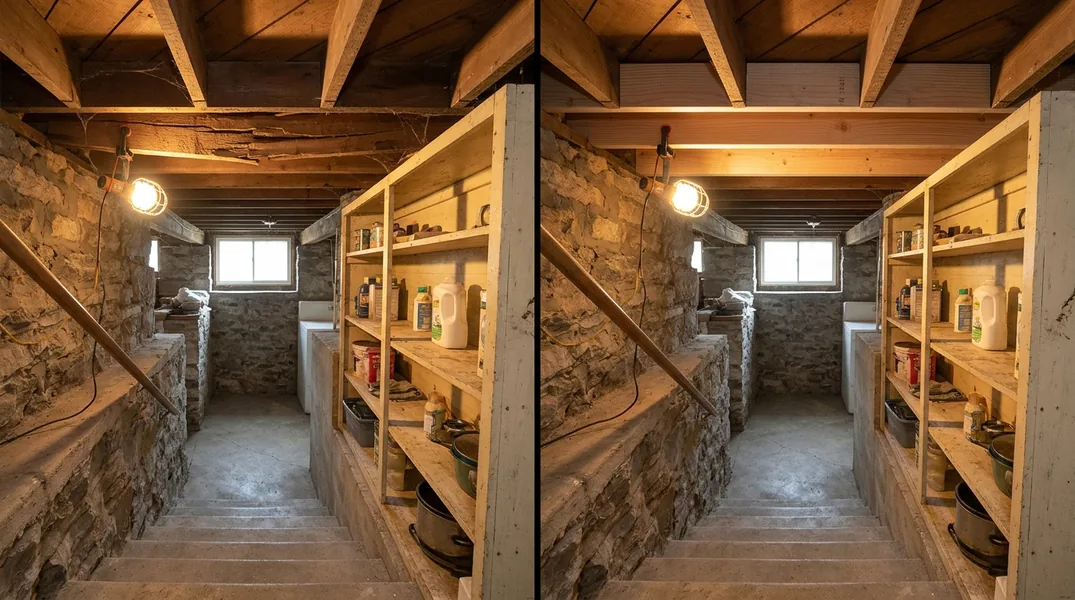
Why Is My Floor Sagging? Common Causes in Older Des Moines Homes
If you've noticed your hardwood floors sloping toward the center of a room, or if marbles roll across your kitchen without any push, you're dealing with a sagging floor. This isn't just a cosmetic issue or something to ignore until it worsens. A sagging floor is your home's way of signaling that something structural needs attention.
In older homes throughout Des Moines, sagging floors typically stem from one of several culprits. The most common cause is deterioration of the floor joists, the wooden beams that run beneath your floors and support the weight of everything above them. Over decades, these joists can weaken from age, moisture exposure, or pest damage. Wood Rot & Dry Rot Repair is often necessary because moisture from basements, crawl spaces, or plumbing leaks gradually compromises the structural integrity of the wood. Similarly, Termite Damage Repair becomes critical if your home has been invaded by these destructive pests, as termites hollow out wood from the inside, leaving it structurally unsound.
Another frequent cause is inadequate support from the foundation or main support beam. If the central beam that runs under your home has settled, cracked, or weakened, the entire floor system above it will begin to sag. Poor ventilation in crawl spaces can also accelerate wood decay, while excessive moisture from groundwater or poor drainage around the foundation creates the perfect environment for rot to develop.
Understanding Floor Joist Repair and Sistering Floor Joists
When a structural engineer or carpenter inspects your sagging floor, they're primarily looking at the condition of your floor joists. These horizontal beams are the backbone of your floor system, and when they fail, the entire structure suffers. Floor joist repair can range from simple reinforcement to complete replacement, depending on the extent of the damage.
One of the most effective and cost-efficient repair methods is sistering floor joists. This process involves installing a new, pressure-treated wooden beam (called a sister joist) alongside a damaged or weakened existing joist. The two beams are then bolted or nailed together, creating a stronger, combined unit that can bear the load. Sistering is particularly useful when the damage is localized to one or two joists, or when the existing joists are simply undersized for the load they're carrying. Floor Joist & Subfloor Repair specialists in Des Moines can assess whether sistering is appropriate for your situation or if more extensive work is needed.
In some cases, especially when rot or termite damage is severe, partial or full joist replacement becomes necessary. This involves removing the compromised beam and installing a new one in its place. While more labor-intensive than sistering, replacement ensures that your floor system is restored to full structural capacity. The choice between sistering and replacement depends on the damage assessment, the age of your home, and the overall condition of the surrounding structure.
How Moisture and Decay Lead to Sagging Floors
Moisture is the silent enemy of wooden structural components in any home, but especially in older properties. In Des Moines, where humidity levels fluctuate with the seasons and basements are common, moisture infiltration is a persistent threat. When water seeps into crawl spaces, basements, or around foundation cracks, it creates an ideal environment for wood rot to develop. Dry rot, despite its name, actually requires moisture to flourish, and once it takes hold in floor joists, it spreads rapidly and compromises the wood's load-bearing capacity.
The decay process happens gradually. Initially, you might not notice anything wrong. The rot begins at the wood's surface and works inward, often hidden from view. By the time you see visible signs of sagging, the damage is typically well-established. This is why regular inspections of your basement or crawl space are so important, especially in homes built before modern moisture barriers and ventilation standards were implemented.
Poor drainage around your home's foundation accelerates this problem. If gutters are clogged, downspouts don't direct water away from the house, or the grading slopes toward rather than away from your foundation, water will find its way into the spaces below your floors. Addressing moisture issues is just as important as repairing the structural damage itself. Without fixing the underlying moisture problem, new joists or repairs will eventually fail to the same conditions.
Sagging Floor Repair Cost in Des Moines: What to Budget
The cost of repairing a sagging floor varies dramatically based on the underlying cause, the extent of damage, and the repair method required. There's no one-size-fits-all answer, which is why getting a professional assessment is essential before budgeting for work.
Sistering floor joists is generally the most affordable repair option, typically ranging from $1,000 to $3,000 per joist depending on the joist's length and the complexity of access. If you need to sister multiple joists, costs multiply accordingly. Full joist replacement is more expensive, often running $2,000 to $5,000 per joist, as it involves removal of the old beam and installation of a new one. If your sagging floor is caused by a failing main support beam or requires Beam Replacement & Load-Bearing Wall Removal, costs can escalate significantly, potentially reaching $5,000 to $15,000 or more, especially if temporary support walls are needed during construction.
Additional factors that influence pricing include the need for moisture remediation, foundation repair, or addressing underlying rot and decay. If your home has termite damage, that adds another layer of complexity and cost. Labor costs also depend on how accessible the damaged area is. A joist in an unfinished basement is easier and cheaper to repair than one requiring removal of finished flooring, subflooring, and subsequent restoration.
The best approach is to contact Des Moines Carpentry for a free estimate. Our team will inspect your floor system, identify the root cause of the sagging, and provide you with a detailed breakdown of repair options and realistic costs. Call us at (515) 762-6553 to schedule your evaluation.
When to Call a Professional for Sagging Floor Repair Near Me
Not every sloped floor requires immediate professional intervention, but certain warning signs should prompt you to act quickly. If you notice new or worsening sagging, visible cracks in the floor or walls, soft or spongy spots in the wood, or a musty odor in your basement or crawl space, these are red flags that structural damage is occurring. Ignoring these signs can lead to more extensive and expensive repairs down the road, and in extreme cases, can pose safety risks to your home's occupants.
A professional carpenter or structural engineer can determine whether your sagging floor is a minor settling issue or a serious structural problem. They'll inspect the joists, look for rot or pest damage, check for moisture problems, and evaluate the foundation and support beams. This comprehensive assessment is the only way to know what repairs are truly necessary and what your home's long-term structural health looks like.
If you're in Des Moines and concerned about sagging floors, don't wait. Contact Des Moines Carpentry today at (515) 762-6553 or visit our website to request a free estimate. Our experienced team has repaired countless floors in older homes throughout the area and can provide honest, professional guidance on the best solution for your situation.
Prevention: Protecting Your Floors from Future Damage
While repairing a sagging floor addresses the immediate problem, preventing future damage is equally important. Proper moisture management is the foundation of long-term floor health. Ensure your gutters and downspouts are clean and functioning properly, directing water at least 4 to 6 feet away from your foundation. Check your grading to make sure water slopes away from your home rather than toward it. In your basement or crawl space, consider installing a vapor barrier and ensuring adequate ventilation to keep humidity levels in check.
Regular inspections of your basement, crawl space, and visible floor joists can catch problems early, before they become expensive repairs. Look for signs of moisture, discoloration, soft spots, or insect activity. If you spot any of these issues, address them promptly. Treating a small area of wood rot is far less costly than replacing multiple joists years later after the problem has spread.
If your home has experienced water intrusion or you suspect moisture problems, don't delay in having a professional evaluate the situation. Early intervention can prevent the cascade of structural failures that lead to sagging floors. Des Moines Carpentry is here to help with both emergency repairs and preventive assessments. Reach out to us at (515) 762-6553 whenever you have concerns about your home's structural integrity.
Looking for a professional carpentry contractor in Des Moines? Des Moines Carpentry responds fast for all your carpentry needs.
Get a Free QuoteOur services: Wood Rot & Dry Rot Repair · Termite Damage Repair · Floor Joist & Subfloor Repair